
Services · three tiers

Three shapes of engagement. Priced on scope, not hours.

You should know the number before the work starts. Each tier below maps to a different stage — diagnosis, build, or ongoing capacity. Pick the one that matches where you are.

The Three Tiers
Hand-drawn ink sketch of an open notebook with a magnifying lens resting on the page, a Yale Blue underline beneath the marks, and a small vermilion seal
Tier 01

Audit & Quick Wins

$5K – $15K
1–2 weeks
  • Workflow discovery across 1–3 teams
  • 3–5 opportunities surfaced and prioritised
  • Roadmap delivered end of week 2
  • First-pass prototype for one quick win
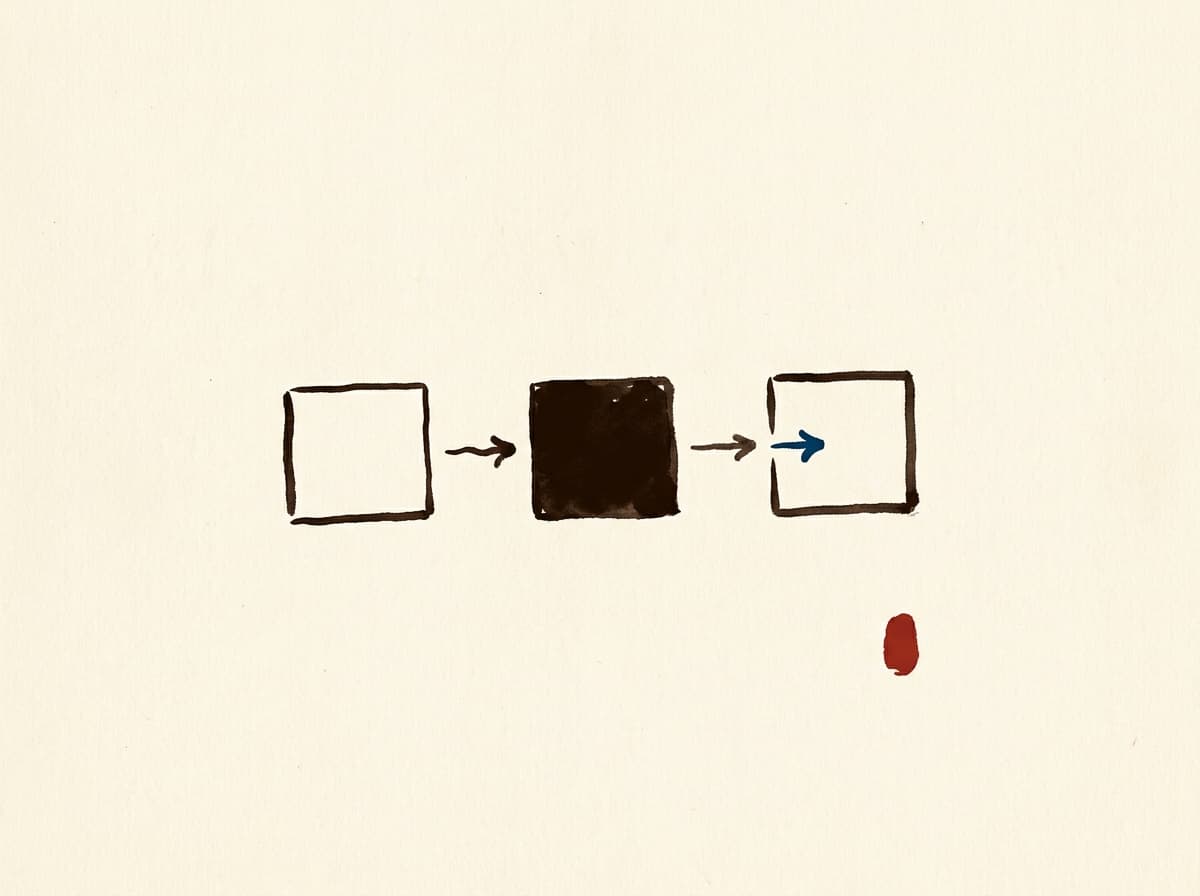
Three small ink boxes connected by arrows, with the middle box filled solid in espresso ink and a Yale Blue arrow pointing to the third, and a vermilion seal beside it
Tier 02

Workflow Automation

$25K – $75K
4–8 weeks
  • One workflow, prototype → production
  • Eval harness and monitoring in place
  • Handoff kit and team enablement session
  • Claude-first, model-agnostic in practice
Continuous wave-like ink line drawn in a single fluid motion across cream paper, with three Yale Blue dots placed at evenly-spaced intervals along the wave
Tier 03

Embedded AI Ops

$10K – $20K / mo
Ongoing
  • Fractional senior AI engineering capability
  • Continuous workflow improvement
  • Evals, monitoring, model-swap governance
  • 4–6 hours per week of senior operator time
Tier 01 · The Audit · Week-by-Week

What two weeks actually looks like.

We don't disappear into a discovery phase and reappear with a 60-page deck. The audit is structured so you see output from week one and have a working prototype to evaluate before you commit to a build.

Two weeks · staging-ready prototype
Week 1 · Mon–Wed
Workflow discovery
Interviews with operators across 1–3 teams. We watch the work happen. We don't run a survey.
Week 1 · Thu–Fri
Opportunity sizing
3–5 candidate workflows. For each: a defensible value-at-stake, the integration risk, and the failure modes that matter.
Week 2 · Mon–Wed
Prototype the highest-leverage one
First-pass build. Real data, real triggers, scaffolded eval harness. We ship to staging.
Week 2 · Thu–Fri
Roadmap and handoff
Prioritised roadmap, scoped costs, the candid 'don't build this yet' calls, and a 30-minute walkthrough with whoever needs it.
Tier 02 · The Build · Week-by-Week

One workflow, prototype to production.

Six to eight weeks. We start with the eval harness, build behind real triggers, and hand off a system your team can extend the day after we leave.

Eight weeks · production-shipped
Weeks 1–2 · Foundations
Eval harness first
We define what 'good' looks like before we build. Test cases, golden datasets, regression gates.
Weeks 3–5 · Production build
Behind a real trigger
The workflow runs against production-grade data, not synthetic prompts. Logging, monitoring, model-swap discipline baked in.
Weeks 6–7 · Hardening
Edge cases and governance
Failure modes documented. Rollback path tested. Escalation rules clear. Cost ceiling enforced.
Week 8 · Handoff
Your team owns it
Enablement session, runbook, eval ownership transfer. Day-one operability is the bar — not 'we'll come back next quarter.'
Tier 03 · The Retainer · Ongoing

Senior AI engineering, fractionally.

For teams who don't want to hire a full-time AI engineer yet but need someone with scars to keep workflows running, model choices honest, and evals up to date.

Capacity

4–6 hrs / week

Senior operator time, not a junior team. We work async on Slack and Linear, with a weekly working session.

Scope

Continuous improvement

Workflow tuning, eval governance, model-swap reviews when a new release lands, and post-incident analysis when things break.

Commitment

Quarter-by-quarter

Three-month minimum. No long lock-in. We'd rather you decide each quarter whether the value is still there.

Start here

Two-week audit. $5–15K.

Tell us about one workflow. We'll come back within a business day with a yes, a no, or what we'd scope.

Describe a workflow